Plan Your Building's Next Roofing System
Commercial Roof Replacement in Los Angeles, CA
Discuss replacement options for your commercial property.
Replace an Aging Commercial Roof With Confidence
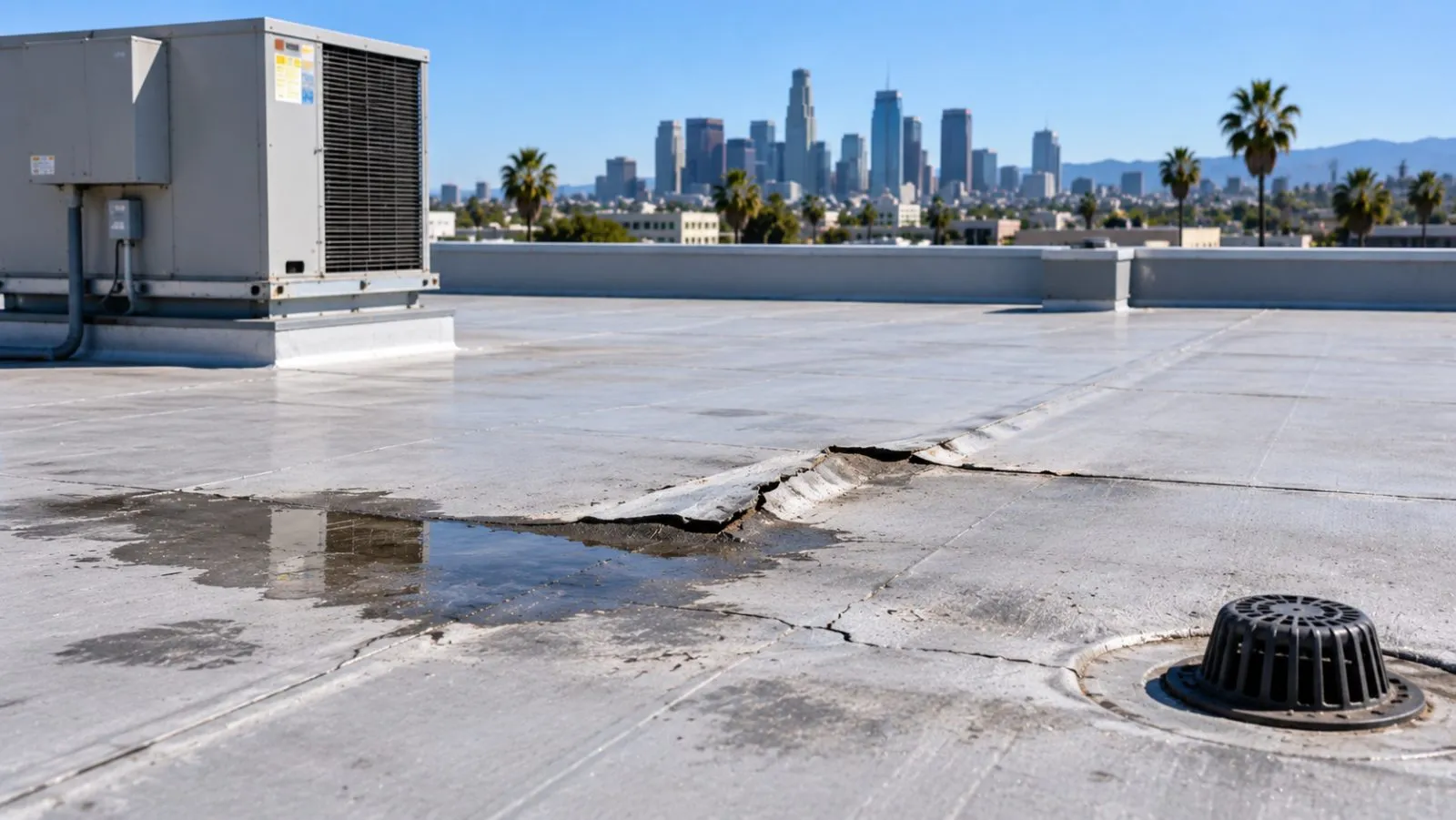
Commercial roofs eventually reach a point where continued repairs may no longer provide a dependable solution. Widespread membrane deterioration, recurring leaks, and moisture beneath the roofing surface can indicate that a more comprehensive approach is needed.
LA Commercial Roofing Services helps Los Angeles property owners evaluate commercial roof replacement options. We consider the existing roof assembly, building requirements, drainage, rooftop equipment, and applicable construction standards when discussing a replacement project.
When Replacement Makes Sense
A commercial roof does not necessarily need replacement simply because it has developed a leak. The decision should reflect the overall condition of the roof, the extent of damage, and whether the existing materials can continue performing effectively.
When problems affect numerous areas or moisture has compromised underlying components, replacement may provide a more practical long-term solution.
Preparing for a Commercial Roofing Project
Replacing a roof involves more than selecting a new membrane. Existing materials, insulation, deck conditions, drainage components, and equipment connections all need consideration. Planning these details before installation helps establish a clear project scope.
Los Angeles Roofing Requirements
Commercial roof replacement may involve building permits, California energy standards, fire classification requirements, and other local regulations. The requirements depend on the building and the scope of work.
LA Commercial Roofing Services Is Proud to Serve Los Angeles, CA
Commercial Roof Replacement Options
The appropriate replacement system depends on how your building is constructed and used. We consider both the roofing surface and the components beneath it.
Complete Roof System Replacement
A complete replacement may involve removing existing roofing materials to expose the underlying assembly. This provides an opportunity to identify deteriorated insulation, damaged decking, and other concealed concerns. The new roofing system can then be planned around the building's condition, drainage requirements, and applicable standards. Removal requirements depend on the existing roof and the proposed replacement.
Single-Ply Roof Replacement
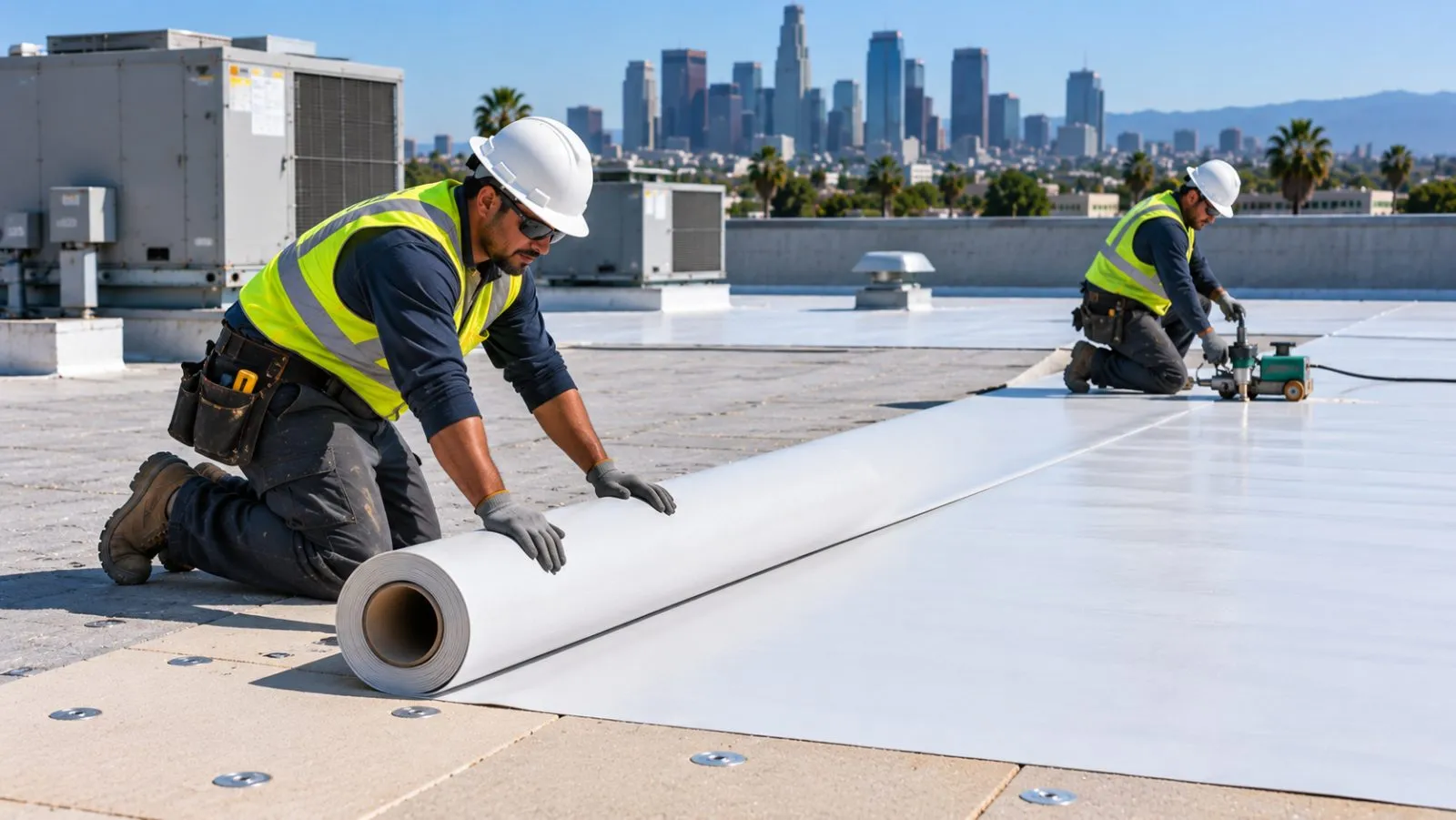
Single-ply roofing systems use manufactured membrane sheets to create a protective surface across commercial low-slope roofs. TPO is one common option for buildings exposed to strong Southern California sunlight. System selection should consider membrane attachment, insulation, wind resistance, roof traffic, and compatibility with the building's construction.
Modified Bitumen Roof Replacement
Modified bitumen roofing uses asphalt-based membrane materials designed for low-slope applications. These systems may be appropriate for commercial buildings where roof configuration or operating conditions favor a layered roofing assembly. Installation methods and material selection depend on the existing structure, fire safety considerations, and manufacturer requirements.
Roof Insulation Improvements
Roof replacement creates an opportunity to evaluate existing insulation and thermal performance. Damaged or moisture-affected insulation may need removal, while other projects may require insulation upgrades to meet applicable energy standards. Insulation planning should account for roof height, drainage, equipment curbs, and the overall roofing assembly.
Roof Drainage Improvements
Existing drainage problems should be considered before installing a new commercial roof. A replacement that overlooks persistent ponding or inadequate drainage may leave important building concerns unresolved. Depending on the structure, improvements may involve drain connections, tapered insulation, or other design changes that support appropriate water movement.
Why Choose Us for Commercial Roof Replacement?
Condition-Based Planning
Replacement recommendations consider the existing roof assembly rather than relying on age alone.
Building-Specific System Selection
We discuss roofing options in relation to your building's construction and daily use.
Attention to Underlying Components
Insulation, decking, drainage, and equipment connections are important parts of replacement planning.
Consideration for Occupied Properties
Project planning takes business activities and building access into account.
Discuss Your Commercial Roof
If recurring repairs are no longer providing dependable protection, request a commercial roof replacement estimate for your Los Angeles building.
Tell us about your property and roofing needs.
Our Commercial Roof Replacement Process
Evaluate the Existing Roof
Review visible roof conditions, existing materials, drainage, and the history of roofing problems.
Discuss Suitable Systems
Compare replacement approaches based on building requirements and roofing conditions.
Establish the Project Scope
Identify removal requirements, insulation needs, equipment considerations, and applicable approvals.
Coordinate Installation
Plan material delivery, roof access, weather considerations, and installation activities.